About Me
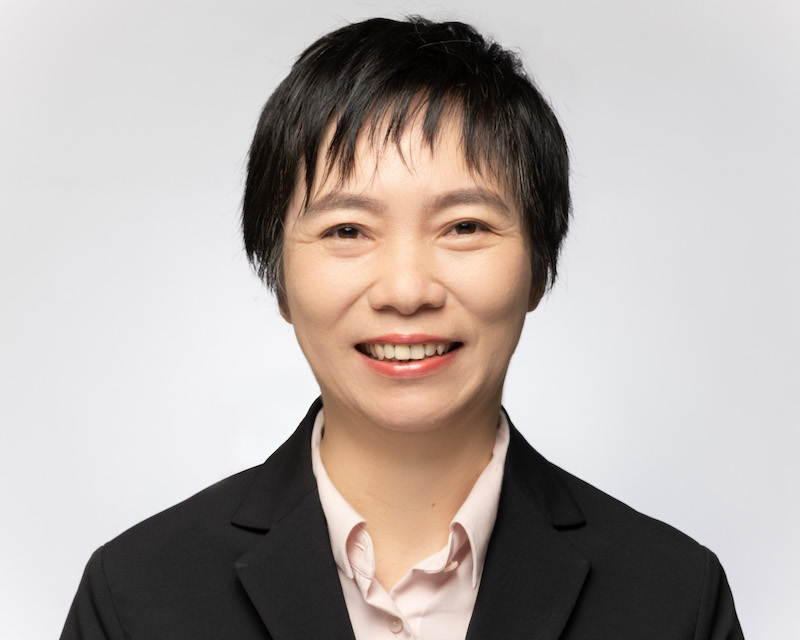
I am Professor at the College of Computer Science and Artificial Intelligence, Fudan University, Shanghai, China, and hold a joint appointment at the Institute of Trustworthy Embodied AI, Fudan University. I also serve as a Part-Time Advisor at Shanghai Innovation Institute and an Adjunct Advisor at Shanghai Artificial Intelligence Laboratory.
My research interests are in artificial intelligence, natural language processing, and large language models, with a focus on foundation language models and reasoning, LLM value alignment, autonomous agents, and model interpretability. I have published over 300 papers in leading NLP, AI, and IR conferences and journals, with more than 45,000 citations according to Google Scholar. My work has received several awards, including Best Paper Awards at CCL 2019, CCL 2023, and the Instruction Workshop @ NeurIPS 2023; an Area Chair Favorite Award at COLING 2018; and Outstanding Paper Awards at ACL 2017, NLPCC 2019, and COLING 2022. Additionally, two of my papers have been recognized with annual outstanding paper awards by the Science China series journals.
In addition to my research, I actively contribute to the research community. I currently serve as an Executive Committee Member of the Association for Computational Linguistics, Chair of AACL, and a Steering Committee Member of SIGIR-AP. I have also served as Program Co-Chair for SIGIR-AP 2023, EMNLP 2021, CCL 2019, and NLPCC 2017, and as General Co-Chair for NLPCC 2020.
News
- [2026.11] AACL-IJCNLP 2026, the 5th Conference of AACL and the 15th IJCNLP, will be held in Hengqin, China on November 6–10, with the main conference on November 6–8 and workshops and tutorials on November 9–10.
- [2026.11] NLPCC 2026, the 15th CCF International Conference on Natural Language Processing and Chinese Computing, organized by the CCF Technical Committee on Natural Language Processing, will be held in Macau on November 3–5.
- [2026.10] We released a technical preview of A5 (v0.3.1), a proactive personal assistant that gets to know you better the more you use it. It builds a long-term understanding of the user and their projects and applies it to new tasks, notices changes in workspace materials and adjusts tasks in progress, and suggests next steps before the user asks.
- [2026.10] With Tencent Hunyuan, we released WorkForge, a framework that builds verifiable training environments for work agents from real-world resources, with 16.7K environments across 40 professional domains. Post-training Qwen3.5-35B-A3B-Base on them raises GDPval from 45.5 to 73.6.
- [2026.09] With Shanghai Innovation Institute, King’s College London, the University of Oxford and others, we released SocioVerse2, an open-source research cockpit for social science that lets researchers intervene in long-horizon social simulations mid-run and fork counterfactual branches for comparison. Seven case studies cover reproducing classic agent-based models, policy simulation, and macro index forecasting.
- [2026.09] We released Atria Dawn with Shanghai AI Laboratory, an open-source (MIT) agentic model built on a 744B-parameter MoE foundation model with a 256K context window. It is designed for research and engineering work that needs tool use and multi-step execution, such as deep research, software building, and report generation. Across 16 benchmarks it is competitive with frontier agents and achieves the highest reported score on five.
- [2026.09] The Fudan AI course teaching team I lead received Fudan University’s 2026 “Zhong Yang-style” Excellent Team award. The team has built 32 courses in the university’s AI-BEST curriculum, one third of all courses approved.
- [2026.04] With Shanghai Qiji Zhifeng, we released Agentic Harness Engineering (AHE), which lets a coding agent evolve its own harness automatically. Ten iterations lift Terminal-Bench 2 pass@1 from 69.7% to 77.0%, surpassing the human-designed Codex-CLI harness, and the evolved harness transfers to SWE-bench Verified and other model families.
- [2026.02] With Tencent Hunyuan, we released CL-bench, a benchmark of 500 expert-crafted contexts and 1,899 tasks that tests whether language models can learn new knowledge from context. Ten frontier models solve only 17.2% of tasks on average, and the best, GPT-5.1, solves 23.7%.